
Most Oklahoma City homes were built with far less attic insulation than today's recommendations. Ranch homes from the 1950s through the 1970s often have 3 to 6 inches of old fiberglass or rock wool left, and even homes from the 1990s and 2000s usually have settled loose fill with joists showing in spots. That thin layer lets summer heat from a 140°F attic soak straight into the ceilings below.
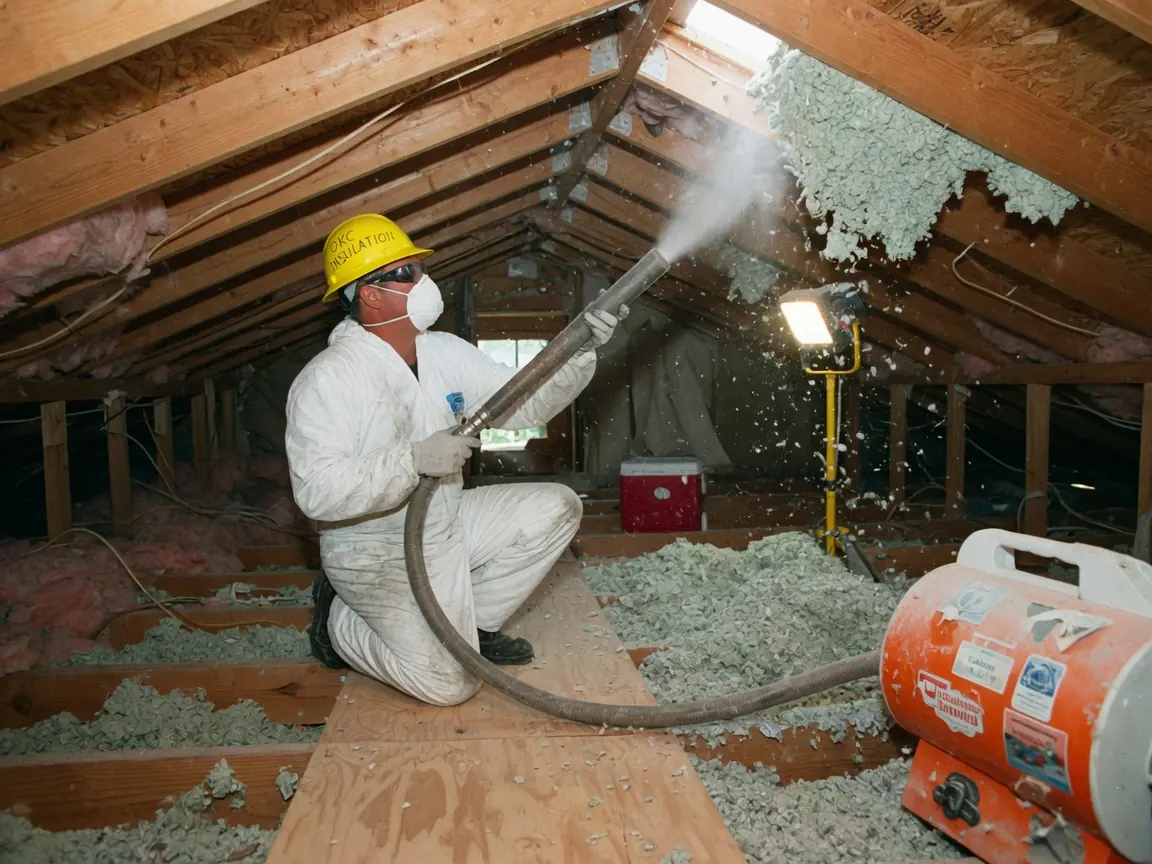
Blown-in insulation is the fastest and most cost-effective way to fix it. Loose-fill fiberglass or cellulose is blown through a hose from a truck-mounted machine and settles into every joist bay, around wiring and over the tops of ceiling joists, with no seams or gaps the way batts leave them. Most attics are finished in a single day without anyone working inside your living space.
Owner Austin Parker or a crew lead inspects every attic before we quote it. We measure the existing depth, check for roof leaks, rodent activity and bath fans venting into the attic, and tell you whether a simple top-up will do or whether old insulation should come out first.
Oklahoma City tip
ENERGY STAR recommends R-49 total for an uninsulated attic in Oklahoma's climate zone 3, or adding about R-38 when 3 to 4 inches are already in place. OG&E also offers a rebate on qualifying attic upgrades for homes at least 10 years old, so ask us about it at your estimate.
Signs Your OKC Attic Needs More Insulation
- ✓Ceiling joists visible above the insulation
- ✓Less than about 10 inches of insulation on the attic floor
- ✓Hot ceilings and upstairs rooms on summer afternoons
- ✓Cold rooms and drafts at ceiling fixtures in winter
- ✓An AC that runs most of the day in July and August
- ✓Uneven, matted or settled patches across the attic
Fiberglass or Cellulose: Which Blown-In Material Fits Your Attic
Loose-fill fiberglass provides roughly R-2.2 to R-2.9 per inch, does not absorb moisture, and settles very little. R-49 takes about 16 to 20 inches depending on the product. It is a good fit for most OKC attics, especially where there is any history of roof leaks.
Cellulose provides roughly R-3.2 to R-3.8 per inch, so R-49 takes about 13 to 14 inches, and its density slows air movement better than fiberglass. It is made largely from recycled paper treated with borates for fire and pest resistance. We price both, and either one performs well when the attic floor is air sealed first.
Blown-In Insulation Services We Offer
✓Attic Top-Ups
Blowing new insulation over sound existing material to reach R-38 to R-49.
✓Full Attic Insulation
New homes, additions and attics stripped after removal work.
✓Baffles and Vent Chutes
Keeping soffit vents open so the attic can breathe.
✓Hatch and Pull-Down Stair Covers
Insulated, weatherstripped covers for the biggest hole in the ceiling.
✓Air Sealing Before Blowing
Sealing top plates, fixtures and penetrations before insulation goes in.
Blown-In Insulation Cost in Oklahoma City, OK
| Project | Typical Range | What Affects It |
|---|---|---|
| 1,000 sq ft attic to R-38 to R-49 | $1,250–$2,500 | Existing depth and material |
| 1,500 sq ft attic to R-38 to R-49 | $1,900–$3,750 | Access and attic layout |
| 2,000 sq ft attic to R-38 to R-49 | $2,500–$5,000 | Depth added and baffles needed |
| Air sealing added before blowing | $500–$1,500 | Number of penetrations |
Planning ranges for Oklahoma City homes, about $1.25 to $2.50 per square foot. Your free estimate gives the exact written price after we measure.
How It Works
- 1
Attic Inspection
We measure existing depth and check for leaks, pests and ventilation.
- 2
Prep and Air Sealing
Baffles go in at the eaves and major air leaks are sealed.
- 3
Blow to Depth
Insulation is blown evenly to the depth markers for your target R-value.
- 4
Depth Check
We show you the depth rulers, clean up and leave a written record.
Related reading: Blown-In vs Rolled Insulation for OKC Attics Attic Insulation Cost in Oklahoma City